Beyond the Doctorate
Work that ran alongside the PhD.
Four strands in more detail: the TRANSMIXR broadcast studio, volumetric capture integration, HackAthlone, and four years of evaluating what the XR vendor market was actually selling.
01 — TRANSMIXR
Project
TRANSMIXR, a Horizon Europe project on immersive media creation
Role
Research assistant, taking handover of the TUS Control Room and advancing it to demonstration readiness
When
April to July 2025, alongside the doctorate
Stack
Unity, Netcode for GameObjects, NDI, OBS, WebSockets, Vivox
A multi-user XR broadcast studio
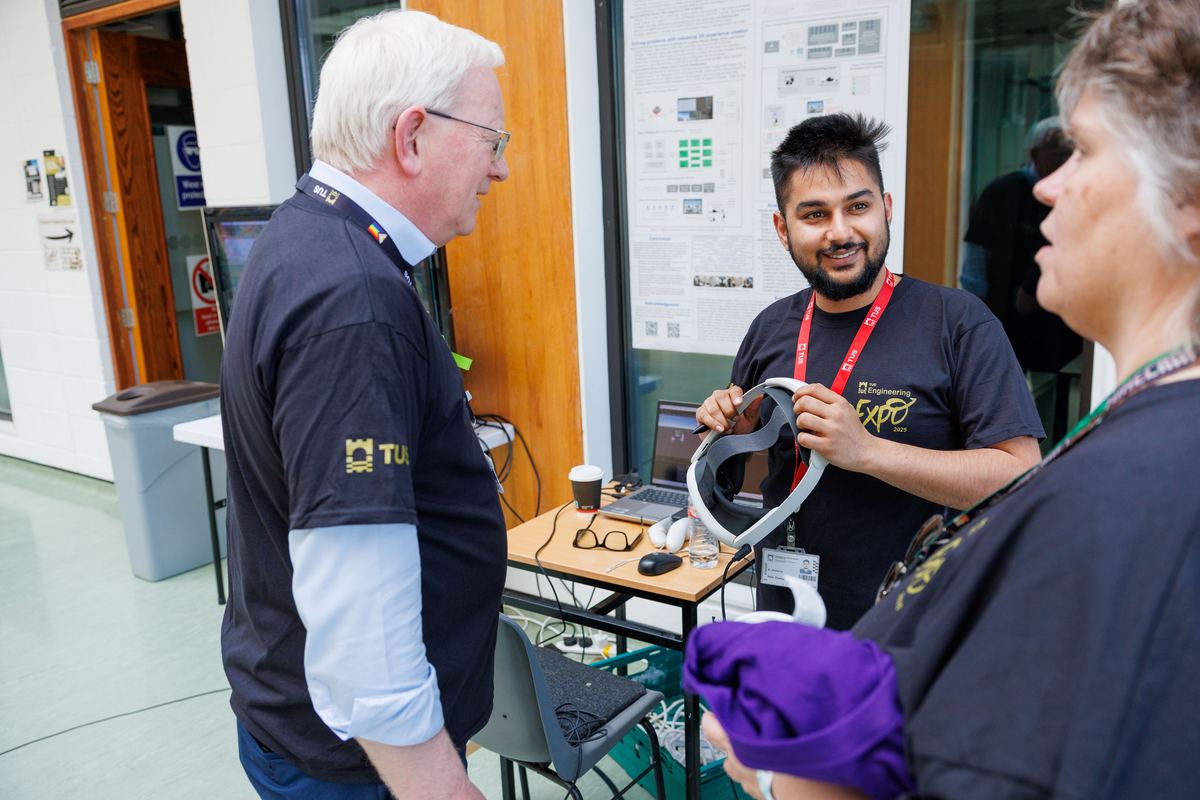
The TUS Control Room is an authoring tool for news broadcasting in which a director, producer, journalist and presenter occupy the same virtual studio and build broadcast-ready output together. It is the same problem as my doctoral work seen from a different industry: several non-programming professionals, one shared 3D environment, and a deadline.
I took handover from the previous researcher over a fortnight, which went less smoothly than planned. My partner-issued laptop had a firewall that blocked the networking the project depends on, and the replacement lab machine had a graphics card that would not hold a headset link. A useful reminder that in multi-user XR, most of the first week is infrastructure.
What I delivered
- Virtual studio lighting control, operable live from inside the experience.
- Virtual camera output routed into OBS for live production.
- Live video and audio synchronisation over NDI, which had been an open defect.
- A built virtual studio environment, subsequently optimised and baked.
- WebSocket control of audio, scene transitions and on-screen graphics.
- Default virtual camera positions, and groundwork for presenter position control.
Alongside the build I documented what I found, because the project had grown faster than its documentation. Network configuration before a demo was tribal knowledge, build steps differed by role, and role privileges were not clearly defined. Writing that down was not glamorous and it is the part the next person will use.
02 — Volumetric Capture
Partner
CERTH, the Centre for Research and Technology Hellas
Task
Configure a multi-camera rig for two simultaneous volumetric captures with audio, into Unity
When
Summer 2025
Getting two people into the same volumetric scene
Volumetric capture puts a real person into a virtual environment as live geometry rather than as a flat video plane. Doing it for one person is now fairly routine. Doing it for two at once, with synchronised audio, streamed into a running Unity production, is where the practical problems live.
Working directly with the partner's engineer, we brought up a combined seven camera arrangement and worked through the configuration sequence needed to hold both captures in sync. I then unit-tested the capture plugin against our own broadcast studio project, so the integration test with two presenters in the Control Room could follow.
The wider TRANSMIXR engagement also took me into national broadcaster test preparation with TG4 and into evaluation sessions run with Trinity College Dublin and Satore Studio. Four months of watching other teams run immersive evaluations was, in hindsight, some of the most useful methodological training I got.
03 — HackAthlone
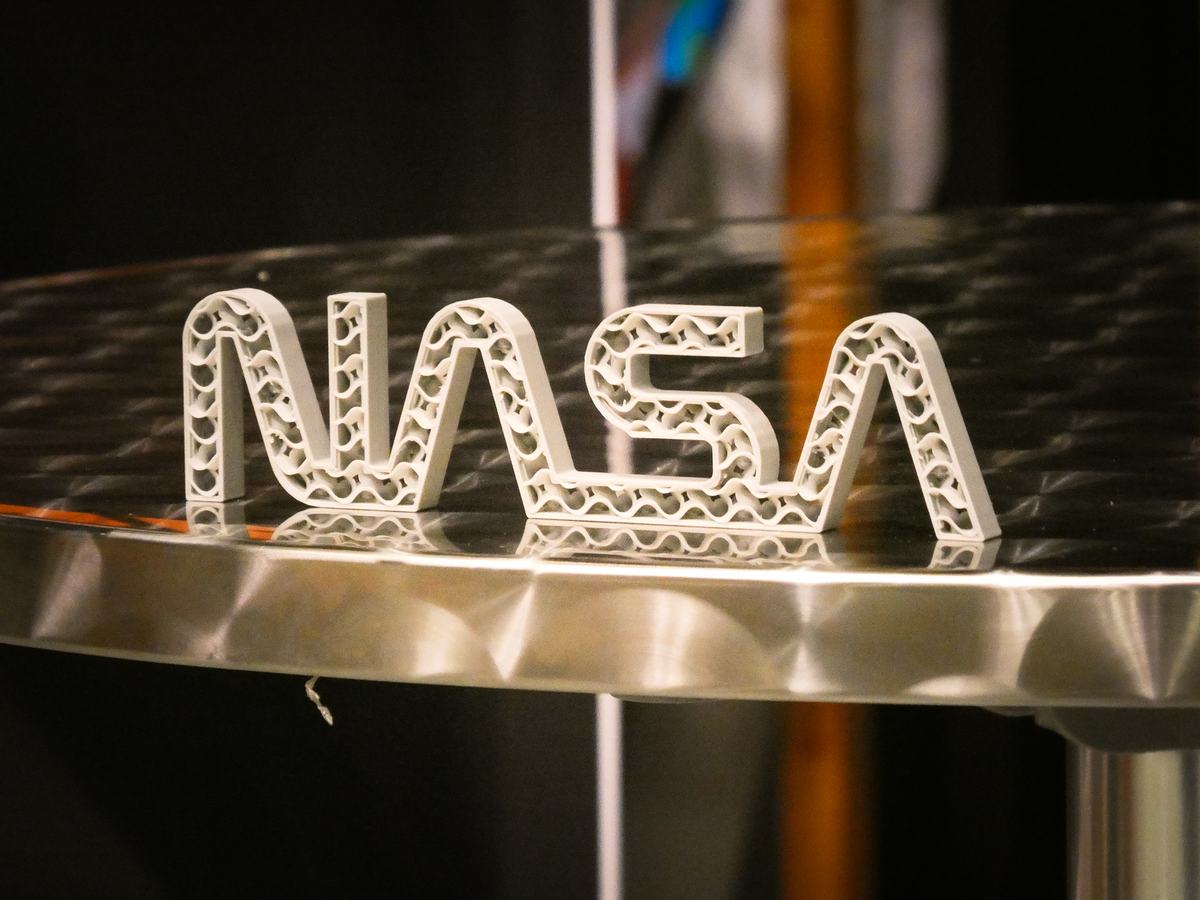
Bringing the NASA Space Apps Challenge to the midlands
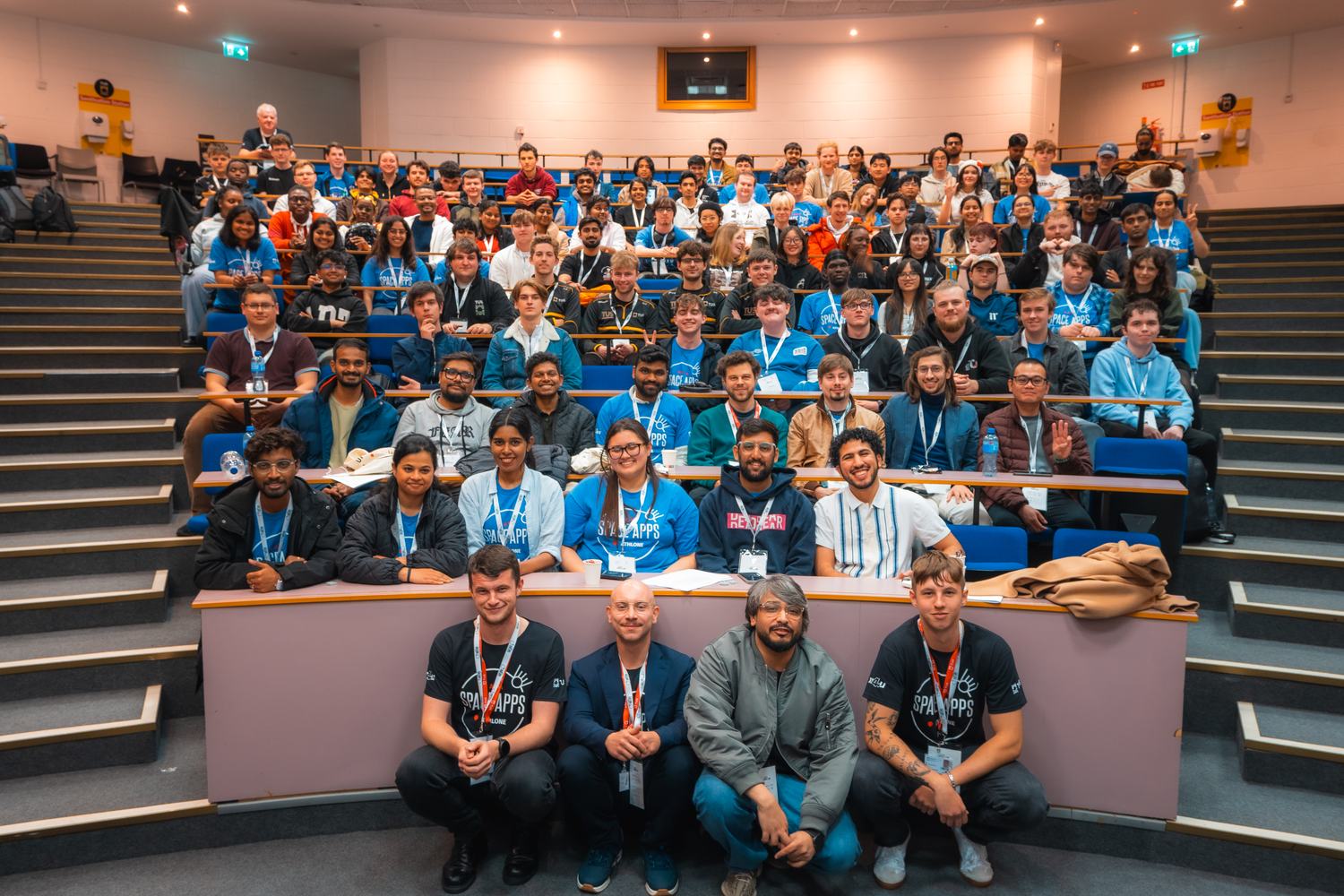
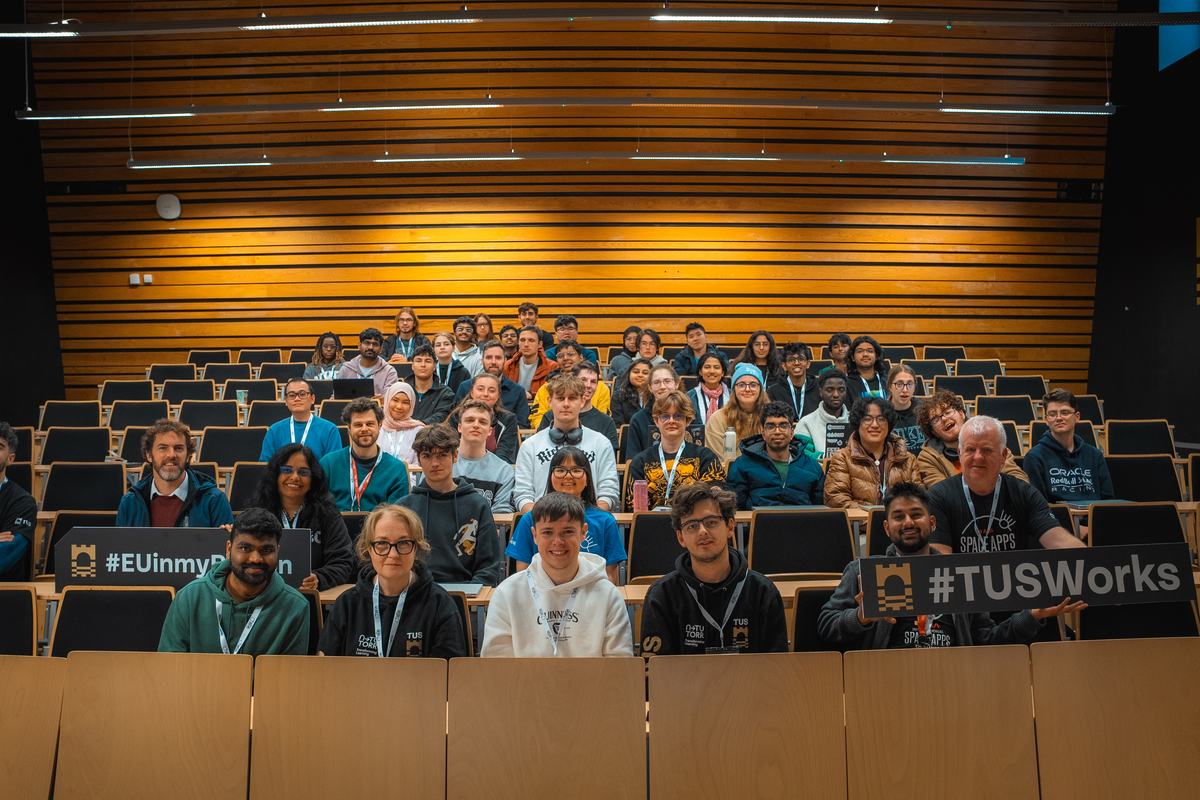
The objective was not one good weekend. It was to spread the hackathon movement in Ireland, which means the event has to recur in the same place and grow each time. Three consecutive years in Athlone, after earlier locations in Limerick and Vellore.
What running it involves
- Pitching the event to the faculty dean and securing institutional backing.
- Building, defending and revising the budget, then living inside it.
- Venue, catering, insurance, signage, and a schedule that survives contact with sleep-deprived teams.
- Recruiting mentors and judges, including engineering leadership from industry partners in 2025.
- Registration, communications and a side programme that gives people a reason to come back.
Three years in Athlone
Add your registrant counts in projects.html and news-hackathlone.html.
Earlier locations
Location lead for Space Apps Limerick in 2021 and Space Apps Vellore in 2017. Global nominee as a participant in 2016 for an open source virtual reality Mars simulator with custom haptic feedback hardware.
04 — Technology Assessment
Four years of watching what the XR market was actually selling
This was never a single report. It ran continuously from the first device benchmark in 2022 to the last procurement conversation in 2026, because the partner kept needing an answer to the same question: is there something on the market that does this better than we can?
Design review platforms
TheoremXR: full hands-on evaluation over a trial secured through a sister
site. Single user and collaborative virtual reality, experience save and load across
headsets, grab modes, component and root manipulation, grouping, point to point and point to
floor measurement, vertex snapping, alignment and tabletop view. Tabulated against the
in-house templates and written up as an internal decision paper.
Mersus Technologies: assessed through a Digital Manufacturing Ireland
workshop alongside other enterprise XR vendors.
Remote rendering
Holo-Light AR3S and the ISAR SDK on a waveguide headset, pursued through on-premise setup, driver and firewall debugging, and support escalation with the vendor's engineers until the failure modes were understood. The interest was whether remote rendering removes the model size ceiling that local rendering imposes.
Digital twin toolchains
Reported on a full day Digital Manufacturing Ireland workshop covering product, production and performance twins. Assessed NVIDIA Omniverse as an aggregation platform and its connector model, Dassault Systemes 3DEXPERIENCE for point cloud import and plant simulation, and data driven line simulation tooling for work in progress optimisation.
Capture and scanning
NavVis web-based 3D scanning for factory floor point clouds, including export paths into Unity, interoperability with Revit and BIM data, and the licensing and deployment model a regulated site would need. Also evaluated 360 capture hardware for research recording.
Toolchain and licensing
Direct engagement with Unity Industry licensing, including working through a reseller dispute, escalating to the client partner for the region, and setting out a floating licence model that would let several engineers share entitlements. Also assessed PiXYZ as the CAD to mesh stage and documented the absence of any viable open source alternative.
Hardware
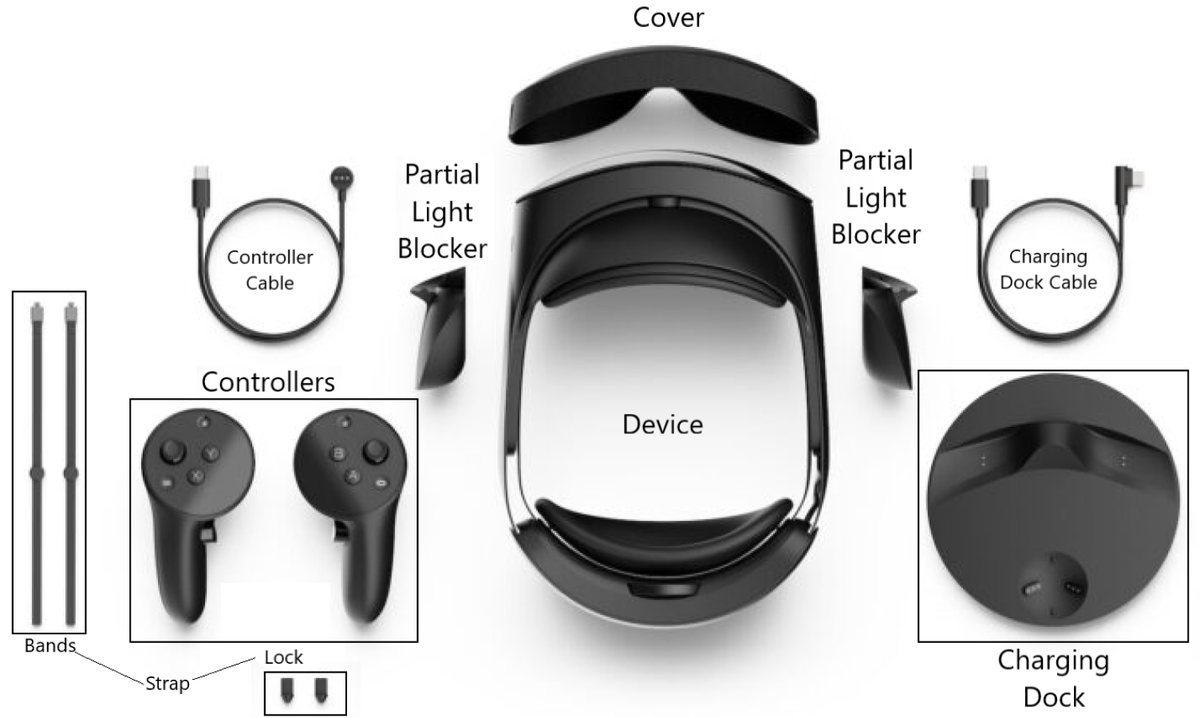
Meta Quest Pro, Quest 3 and Quest 3S, Microsoft HoloLens 2 with MRTK, the XR stylus, PrismXR casting hardware, wireless casting and Air Link operation on segregated networks, and XR laptop specification for a regulated enterprise fleet.